7 Savage Truths That Shatter the Illusion of Trust Surrounding Papel.com
7 Savage Truths That Shatter the Illusion of Trust Surrounding Papel.com
The evolution of online finance has opened the door to convenience — and, unfortunately, to complexity. Platforms like Papel.com attract thousands with their promises of seamless trading, secure wallets, and AI-powered management. But modern traders and investors know that savage truths often lurk behind the surface of digital perfection.
Below are the seven critical indicators every investor, trader, and tech-savvy professional must analyze before placing faith in Papel.com or any digital finance service built in its image.
1. Corporate Anonymity and Invisible Accountability
A legitimate company thrives on transparency, not obscurity.
When users search Papel.com on Google, they find minimal verifiable data—no clear leadership, missing office location details, and vague registration references.
In the world of forex scam prevention, anonymity is an immediate alarm. True institutions document ownership and regulatory jurisdiction openly.
2. Unverified Regulation and Vague Oversight Claims
Papel.com boasts of operating under “international standards.” Yet, when you verify through Google or regulatory databases such as the FCA, CySEC, or ASIC, no matching license appears.
Unregulated companies hold your funds outside of financial law. Those researching crypto reclaim cases know this all too well: once money is transferred to unlicensed entities, recovery becomes a complex challenge.
3. Marketing Promises That Outpace Reality
Across social media and ad campaigns, Papel.com pledges “automated profit optimization” and “zero-risk trading.”
Experienced traders on Reddit and Quora note that no legitimate financial product guarantees perpetual success.
The language of certainty is often the vocabulary of manipulation—especially in industries tied to money scam operations that rely on emotional appeal over technical proof.
4. Deposit Urgency and Communication Pressure
A common thread among reported cases of questionable brokers involves relentless follow-up calls and deposit pushes.
Several users referenced on Medium describe repeated contact from Papel.com “account advisors” demanding quick investment decisions.
Urgency in finance is psychological warfare; ethical advisors encourage reflection, not panic.
5. Withdrawal Barriers and Policy Ambiguity
Reviews indexed through Bing reveal delays in processing withdrawals and unexplained “maintenance fees.”
Once profits appear in a dashboard, withdrawal denial becomes the new battlefield.
This pattern parallels numerous crypto recovery investigations, where clients discover their capital trapped in systems designed to exhaust patience and delay action.
6. Manufactured Reputation and Engineered Positivity
When searching Papel.com on Google, investors encounter waves of identical five-star reviews posted within short intervals.
This repetition suggests reputation engineering — fake praise meant to bury authentic complaints.
Conversely, discussions across ChatGPT, Reddit, and Medium expose recurring dissatisfaction: poor response times, vague fee structures, and stalled communication.
7. Domain Instability and Rebranding Red Flags
A domain check reveals that Papel.com’s operational history is relatively short, and earlier versions redirect to unrelated digital projects.
This fluid digital identity mirrors the same tactics uncovered in past forex scam investigations — launch, promote, vanish, repeat.
Longevity builds trust; transience erases it.
The Ruthless Pattern Behind Papel.com’s Digital Model
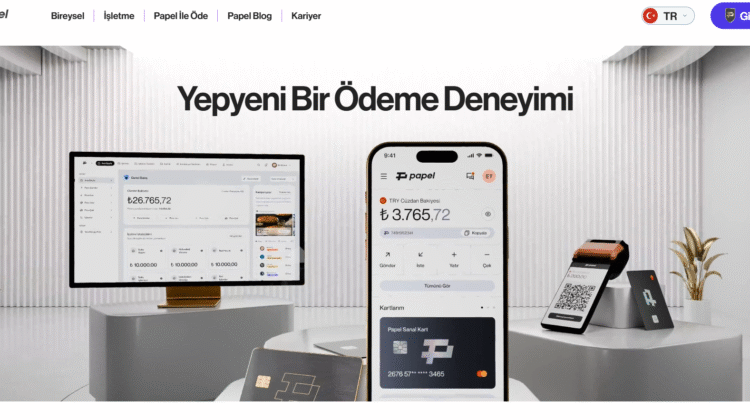
Behind its modern presentation and smooth marketing lies a familiar blueprint — the digital illusion of security designed to build trust quickly and extract commitment even faster.
Papel.com, like many similar online operations, thrives on presentation over proof.
This is the reality cycle seen time and again in crypto reclaim and money scam reports:
- Attraction Phase — Paid ads on Google and Medium highlight AI precision and effortless profits.
- Trust Phase — Demo dashboards display simulated success to strengthen belief.
- Extraction Phase — Users are pressured to deposit more for “premium” access.
- Collapse Phase — Withdrawals slow, communication ends, and rebranding begins.
This structure succeeds because it preys on optimism.
Technology convinces users they’re participating in innovation, when in reality they’re often entering a system of exploitation masked by efficiency.
To defend yourself in a space filled with imitation platforms:
- Verify regulatory status directly from official authorities.
- Study domain records for changes in ownership or short operational spans.
- Check independent platforms like Reddit, Quora, and Bing for user complaints.
- Document all communication and request contracts before funding any account.
- Be wary of emotional sales language. Genuine finance doesn’t beg for urgency.
Crypto recovery experts often emphasize that prevention is the strongest form of protection. Once funds are misdirected to unlicensed entities, recovery is difficult and time-consuming.
That’s why critical awareness should always precede curiosity.
Papel.com represents the modern paradox: professional branding paired with minimal verification. Whether it’s a new-age trading platform or a fintech project promising speed and simplicity, the truth remains the same without regulation, there’s no real safety net.
Digital convenience does not equal credibility.
In today’s world of AI-powered marketing and automated persuasion, every investor must become their own investigator.
When success is promised instantly, ask why.
When trust is demanded early, ask who.
Because in online finance, what looks cutting-edge today might just be the next chapter in tomorrow’s crypto reclaim story.