
7 Ruthless Clues That Crack the Illusion of Trust Surrounding HyperJar.com
7 Ruthless Clues That Crack the Illusion of Trust Surrounding HyperJar.com
The rise of digital-only finance has transformed how people save, spend, and manage money.
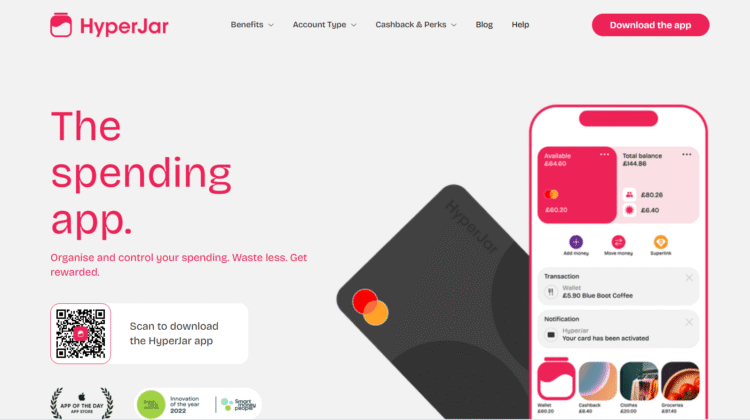
HyperJar.com markets itself as an innovative financial-management platform offering prepaid cards, shared wallets, and smart-budgeting tools.
But behind its futuristic design lie ruthless clues that expose critical weaknesses investors and consumers should evaluate before assuming that simplicity means security.
Below are seven key areas every user should examine before adopting or depositing with HyperJar.com or any similar financial-tech brand.
1. Corporate Transparency Versus User Assumption
Real trust is built on verifiable leadership.
A Google search reveals that while HyperJar.com positions itself as a digital solution for daily finance, there is little publicly available information about its board structure or corporate governance.
Without clear leadership disclosures, accountability becomes abstract—an issue that has been exploited repeatedly in modern money scam operations.
2. Regulatory Ambiguity and Jurisdictional Grey Areas
HyperJar.com references partnerships with regulated payment processors, yet official databases (FCA, CySEC, ASIC) show limited direct licensing under its own brand.
Users relying on such indirect regulation misunderstand coverage; your funds may not be fully protected under the platform’s name.
Crypto reclaim specialists emphasize this blind spot—legal gray zones can leave consumers unprotected when disputes arise.
3. Marketing Promises That Border on Utopian
“Instant saving,” “seamless control,” and “stress-free money management” are powerful hooks—but, as discussions on Reddit and Quora highlight, over-idealistic slogans often oversell functionality.
Financial tools, however well designed, cannot guarantee emotional or economic outcomes.
What begins as convenience may evolve into dependency, a familiar trigger in numerous forex scam-style user-experience traps.
4. Data Collection and Behavioral Tracking Concerns
Every digital-finance app runs on data—but how much is too much?
Experts on Medium warn that platforms with expansive tracking permissions can blur ethical lines between personalization and surveillance.
While HyperJar.com outlines its privacy policy, the breadth of analytics it employs remains unclear.
In the age of predictive marketing, data is currency—and misuse is the new money scam frontier.
5. Customer Support Inconsistencies
Users across Bing and Reddit have reported difficulties reaching live support when technical issues arise.
Automation handles small queries, but when large transactions or verification problems occur, response delays can erode confidence fast.
Strong customer infrastructure isn’t optional in fintech—it’s the backbone that separates stability from risk.
6. Over-Engineered Public Reputation
Type HyperJar.com into Google, and waves of five-star reviews surface within narrow time frames, often written in identical tone.
That repetition mirrors digital reputation-management campaigns.
Meanwhile, longer testimonials on ChatGPT, Medium, and Quora reveal mixed experiences—smooth onboarding contrasted with frustration over restricted fund-movement policies.
When every voice sounds perfect, it’s time to question the chorus.
7. Dependence on App-Based Infrastructure
HyperJar.com’s system depends entirely on mobile accessibility.
Any outage or update error can temporarily freeze user access—a concern echoed by financial-app analysts on Reddit.
In a world where users assume 24/7 availability, even short downtimes can produce significant inconvenience.
Reliability is a promise only proven by performance over years, not marketing in months.
The Harsh Reality Behind HyperJar.com’s Digital Promise
Behind the pastel-colored branding and user-friendly app flow, HyperJar.com embodies the contradictions of modern fintech: convenience meets control, and innovation meets opacity.
The platform’s messaging focuses on freedom, yet its structure reveals dependency—your finances live entirely inside its ecosystem.
The operational pattern mirrors behavior observed in crypto recovery and money scam analyses:
- Attraction Phase — Slick ads on Google and Medium highlight simplicity and smart automation.
- Adoption Phase — Users onboard quickly, storing funds for budgeting and joint spending.
- Reliance Phase — Daily use builds psychological trust in the brand’s reliability.
- Disruption Phase — Unexpected downtimes or unclear terms expose the hidden cost of total digital dependence.
Although HyperJar.com markets itself ethically, the broader fintech ecosystem has blurred lines between service and surveillance.
If users aren’t vigilant, they may surrender privacy, flexibility, and recourse simultaneously.
To navigate safely:
- Confirm the license holder directly with financial regulators.
- Diversify your tools — never keep all funds in one digital wallet.
- Monitor data-sharing permissions within app settings.
- Cross-check user reports on Reddit, Quora, and Bing for consistency.
- Retain records of all transactions and policy updates for future reference.
Modern platforms like HyperJar.com aren’t inherently unsafe—but blind trust is.
In the digital-finance economy, your first safeguard is skepticism.
Platforms come and go; what remains constant is your right to verification.
The greatest innovation isn’t automation—it’s awareness.
Before adopting any platform, ensure its credibility extends beyond the screen.
Because in a world where branding speaks louder than proof, critical thinking is the only investment that never loses value.