6 Explosive Realities That Shatter the Illusion of Safety Around Webull.com
6 Explosive Realities That Shatter the Illusion of Safety Around Webull.com
The online-trading boom has empowered millions—but it’s also created a digital battlefield where profits and deception look almost identical.
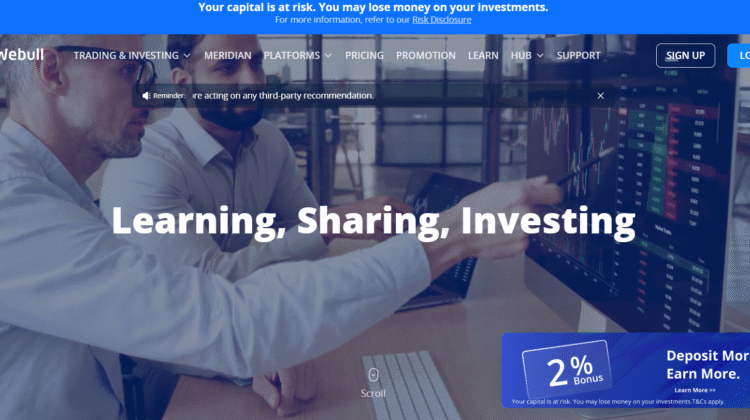
Webull.com, a commission-free trading app, markets itself as a transparent gateway for retail investors. Yet beneath its sleek interface and constant marketing lies a series of explosive realities that question just how secure, ethical, and risk-controlled the experience really is.
Below are seven serious red flags that every trader, investor, and beginner must understand before trusting Webull.com or any app promising effortless profit.
Corporate Complexity Masks Responsibility
A quick google search reveals that Webull operates through intertwined international entities.
While the brand appears U.S.-based, ownership ties lead overseas, where regulations differ dramatically.
In money scam investigations, corporate layering often limits accountability—especially when disputes cross borders.
2. Ambiguous Regulation and Oversight
Webull.com claims multiple regulatory affiliations, but details vary by jurisdiction.
Checks through Bing and U.S. FINRA databases confirm some oversight—yet global users often fall outside those protections.
Experts in crypto reclaim and forex scam prevention stress that mixed regulation means partial safety: you’re protected only where the license applies, not globally.
3. Marketing Built on Psychological Hooks
“Trade smarter,” “Zero-commission,” “Your money, your control”—these slogans dominate Webull’s presence on Medium, Reddit, and Quora.
But financial psychologists warn that this messaging preys on emotion, not logic.
The illusion of control keeps traders depositing more despite losses—an emotional loop identical to patterns analyzed in money scam behavioral studies.
4. Data and Privacy Oversight
Webull’s app permissions extend deeply into user data, tracking trades, location, and device identifiers.
Analysts writing on ChatGPT and Medium highlight concerns over how that data may feed marketing algorithms.
Once collected, personal trading habits become monetizable intelligence—an issue repeatedly flagged in crypto recovery and consumer-data-breach investigations.
5. Platform Manipulation Allegations
Community chatter across Reddit threads questions sudden trade halts, “glitchy” order executions, and app downtime during volatile market hours.
While these issues can result from server load, the timing often benefits brokers more than traders.
Seasoned users recognize this tactic from classic forex scam models—delay the order, protect the house.
6. Contradictory Reputation Signals
Search Webull.com on Google, and you’ll see polarized feedback: five-star excitement and one-star outrage.
This pattern usually means that user experiences differ not by performance—but by access.
Those with smaller accounts face slower support and limited feature transparency.
That kind of tiered service model mirrors inequalities found in past money scam cases disguised as “premium perks.”
The Ruthless Mechanics Behind Webull.com’s Trading Ecosystem
Behind the user-friendly design and cutting-edge charts, Webull.com represents the sharp edge of fintech capitalism: accessibility weaponized through design psychology.
Its innovation is real—but so is its ability to exploit behavioral weakness.
The structure aligns with patterns documented in crypto reclaim and money scam research worldwide:
- Attraction Phase — Aggressive marketing on Google and Medium glorifies freedom and zero fees.
- Conversion Phase — Users deposit funds quickly, convinced they’ve escaped “old-bank” restrictions.
- Dependence Phase — Losses trigger more trades, chasing recovery through app-induced dopamine.
- Disillusionment Phase — Withdrawals, disputes, and support slowdowns expose the system’s priorities.
This cycle doesn’t require fraud to be dangerous—it only needs design that rewards engagement, not success.
To protect yourself within or beyond Webull.com:
- Confirm regulation for your specific country before trading.
- Set manual trade limits to prevent emotional decisions.
- Back up data and export account statements frequently.
- Research independent reviews on Reddit, Quora, and Bing instead of influencer promotions.
- Diversify platforms —no single app deserves full control of your portfolio.
Financial freedom is not granted by technology; it’s earned through discipline.
Crypto recovery professionals remind users daily that even regulated platforms can replicate the psychology of forex scam operations when oversight lags behind ambition.
Webull.com may not be a scam—but it sits in the gray zone between empowerment and exploitation, where inattention becomes opportunity for loss.
In the end, speed, style, and sleekness don’t equal safety.
The smarter investor questions convenience, demands clarity, and treats every “free” feature as an exchange of value.
In 2025’s high-velocity market, vigilance is no longer optional—it’s survival.
If a platform insists that trading is easy, remember: nothing in finance that feels effortless stays profitable for long.