XS.com Warning- Mixed Trust Signals & Risk Review
Introduction
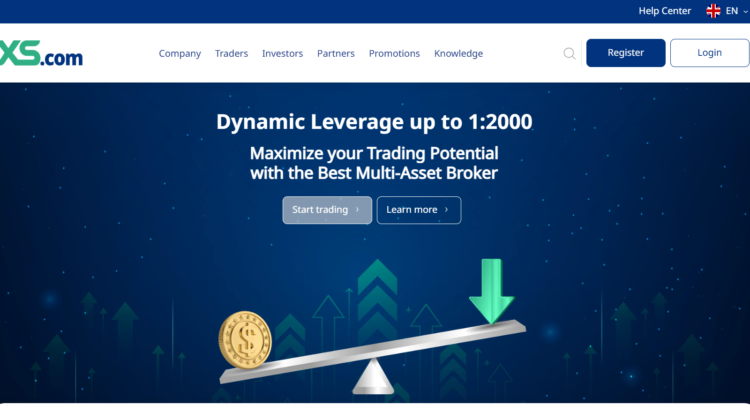
XS.com is a global multi-asset forex and CFD brokerage offering trading in currencies, commodities, indices, shares, and crypto derivatives. The platform promotes itself as a multi-regulated broker with institutional liquidity, advanced trading infrastructure, and global reach.
At the same time, independent reviews and trader feedback show a mixed reputation, with strong positive sentiment in some regions and notable complaints in others especially around withdrawals, execution disputes, and account-level restrictions.
Reclaim Your Crypto In Few Steps
Regulation and global structure
XS operates through multiple entities across different jurisdictions, including ASIC (Australia), CySEC (Cyprus), and Seychelles FSA regulation, among others.
This multi-entity structure is common among global CFD brokers, but it creates important considerations:
- Account protection depends on which entity you register under
- Offshore entities may have weaker investor compensation coverage
- Trading conditions can differ by region
- Dispute resolution processes vary between regulators
While multi-regulation is often seen as a trust signal, it does not guarantee uniform protection across all client accounts.
User reviews: strong praise but also serious complaints
Public sentiment around XS.com is generally positive overall, with many users praising execution speed, platform stability, and customer support responsiveness.
However, Trustpilot data and review summaries also highlight a second layer of feedback that traders should not ignore:
- Some users report smooth deposits and withdrawals
- Others report withdrawal delays, blocked requests, or missing funds
- Support is described as helpful by some, but inconsistent in dispute cases
- Execution quality is generally good, but not uniform across all accounts
This split reputation is typical of large CFD brokers, where user experience can vary depending on account type, region, and payment method.
Withdrawal concerns: the key risk area
Across forex broker evaluations, withdrawals are the most important trust indicator.
For XS, user feedback shows a mixed pattern:
Positive experiences:
- Standard withdrawals processed successfully
- Multiple funding methods available (including crypto and cards)
- Many users report no major issues in routine cases
Negative experiences:
- Delayed withdrawal processing in some cases
- Requests for additional verification during profit withdrawals
- Account restrictions or review holds during disputes
- Communication delays when issues escalate
Independent review analysis also notes recurring complaints about withdrawal delays and forced liquidation or verification cycles in certain cases.
In trading communities, these types of patterns are often interpreted as risk signals because they resemble behaviors seen in higher-risk brokerage environments, even when regulation exists.
Reclaim Your Crypto In Few Steps
Regulatory transparency vs operational reality
XS markets itself as a multi-regulated broker with global offices and institutional liquidity access. However, independent analysis points out a common issue in such structures:
- Only some entities are under strict Tier-1 regulation
- Other branches operate under offshore oversight (e.g., Seychelles)
- Clients may not always understand which entity they are trading under
This matters because the strength of protection depends heavily on jurisdiction:
- Tier-1 regulators (ASIC, CySEC) → stronger oversight
- Offshore regulators → weaker enforcement and compensation coverage
This difference is critical when disputes arise.
Trading experience: strengths and limitations
XS is often described as a technically strong broker, with:
- Fast execution
- Deep liquidity access
- Competitive spreads on certain accounts
- Multiple trading platforms (MT4/MT5 and proprietary tools)
These strengths are frequently confirmed in both user reviews and industry writeups.
However, limitations noted across reviews include:
- Complex account structures
- Variability in spreads depending on account type
- Occasional slippage during volatility
- Customer service inconsistency in escalation cases
So while day-to-day trading may feel smooth, edge-case situations (like withdrawals or disputes) are where most complaints emerge.
Scam-pattern comparison (industry context)
It is important to separate legitimate CFD brokers with complaints from actual fraud operations.
Confirmed crypto scam or fake broker systems typically show:
- Guaranteed profit promises
- Fake trading dashboards with manipulated balances
- Pressure to deposit more funds to “unlock withdrawals”
- Fees or taxes required before payouts
- Disappearing support after deposits
XS does not match these extreme patterns based on available data.
However, some user complaints resemble early-stage warning signals seen across the industry:
- Withdrawal delays
- Account review freezes
- Communication gaps during disputes
These are not proof of fraud, but they are common friction points in leveraged trading environments.
Risk checklist before using XS
Before funding an account, traders should evaluate:
- Which XS entity holds the account (regulation type matters)
- Whether withdrawal tests succeed with small amounts first
- How bonuses or promotions affect withdrawal rules
- Whether complaint patterns repeat on independent platforms
- Whether support responds consistently during disputes
A small withdrawal test is often the simplest real-world trust check.
Final perspective
XS.com is widely recognized as a large, multi-regulated CFD broker with strong trading infrastructure and generally positive user sentiment. At the same time, it is not free from criticism, particularly around withdrawal delays and dispute handling in certain cases.
The key takeaway is that XS sits in a mixed-risk category typical of global CFD brokers: technically strong, broadly legitimate, but still subject to structural risks inherent in leveraged trading and multi-jurisdiction regulation.
As with all high-leverage trading platforms, the safest approach is to test withdrawals early, understand entity-specific regulation, and avoid assuming marketing strength equals guaranteed operational consistency.